A practical guide to Sipirok Arabica coffee from South Tapanuli, North Sumatra — origin, flavor profile, export grading, and what global importers should know before sourcing this specialty green coffee.
Specialty roasters have spent the last decade chasing Sumatra’s famous names — Mandailing, Lintong, Gayo. Fewer have heard of Sipirok, a coffee-growing district in South Tapanuli that sits inside the same volcanic highland belt but rarely makes it onto an international spec sheet under its own name. That is starting to change, as smallholder cooperatives and export-focused processors bring Sipirok’s cherry to market as a distinct, traceable single-origin lot rather than folding it into generic “Sumatra Mandheling” blends.
For importers building a single-origin program, or roasters looking for the next Sumatran story to put on a bag, this guide breaks down where Sipirok coffee comes from, what it tastes like, how it is graded for export, and what to check before signing a contract.
Where Sipirok Coffee Comes From?
Sipirok is a sub-district of South Tapanuli Regency (Tapanuli Selatan), North Sumatra, sitting within the broader highland region that coffee traders often group loosely under “Tapanuli” or “Lintong” growing areas — even though each district has its own microclimate, soil, and farming culture. Coffee here is grown by smallholder families on plots typically at 1,200 to 1,600 meters above sea level, on volcanic soil shaped by the Sumatran fault line that runs the length of the island.
This altitude band matters commercially, not just romantically. Slower cherry maturation at higher elevation tends to build more sugar and density into the bean, which is generally associated with a fuller body and cleaner sweetness in the cup — one of the reasons Sumatran high-altitude arabicas have held a premium position in the specialty market for decades.
How Sipirok Coffee Is Grown and Processed?
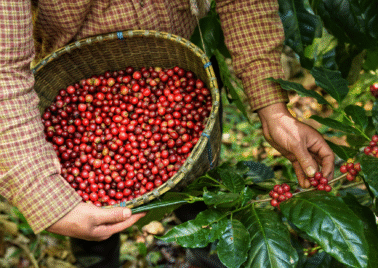
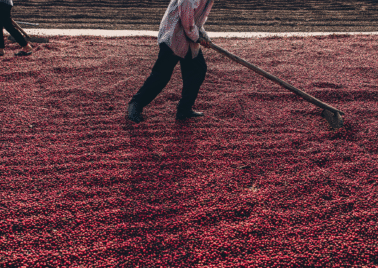
Almost all Sipirok Arabica is farmed by smallholders on plots of one to two hectares, often intercropped with other food crops, rather than on large plantation estates. Cherries are hand-picked and, following the standard practice across North Sumatra, most lots go through wet-hulling (giling basah) — the regional processing method where parchment is hulled while still relatively moist, then finished drying as green bean rather than parchment.
This is the same core processing tradition behind Sumatra’s other well-known origins, and it’s part of why Sumatran coffees in general carry a heavier body and lower, rounder acidity compared to washed East African or Central American lots. Buyers who are new to Sumatran coffee should expect this processing signature, and roasters used to washed coffees may want to adjust their roast curve accordingly — Sumatran wet-hulled beans often roast and develop differently due to their density and moisture profile at intake.
(More premium Indonesian agricultural products are available on request.)
Flavor Profile: What to Expect in the Cup
Trade descriptions of Sipirok coffee are not perfectly uniform yet — which is normal for an origin still building its own identity in export markets — but a few characteristics recur across cupping notes and regional coffee literature:
- Deep, pronounced aroma with a spice-forward character, often described alongside cinnamon, clove, or earthy-herbal notes typical of North Sumatran coffees
- Full body and thick mouthfeel, consistent with wet-hulled Sumatran processing
- Low-to-moderate acidity, giving a rounder, less sharp cup than washed or fruit-forward origins — a profile some sources link to easier tolerance for drinkers sensitive to high-acid coffee
- Balanced sweetness against a bold, sometimes bittersweet finish, rather than the bright, fruity profile associated with some other South Tapanuli micro-origins
Because “Sipirok” is not yet as codified a trade term as Mandailing or Gayo, importers should always request a current cupping report or Q-grader score sheet from the specific lot they are evaluating rather than relying on generic origin descriptions — cup profile can shift meaningfully by farm, harvest, and processing consistency, even within the same district.
Export Grading and Quality Specifications
Indonesian green coffee is regulated for export under SNI 01-2907-2008, the national standard that grades beans by a defect-value system counted per 300-gram sample, alongside moisture content and screen size.
| Grade | Defect Value (per 300g) | Typical Use |
|---|---|---|
| Grade 1 | Maximum 11 defects | Specialty single-origin export |
| Grade 2 | 12–25 defects | Premium commercial blends |
| Grade 3 | 26–44 defects | Standard commercial coffee |
| Grade 4 (4a/4b) | 45–80 defects | Lower-cost commercial blends |
| Grade 5–6 | 81–225 defects | Bulk/industrial use |
For Arabica coffee destined for specialty markets, exporters typically hold to Grade 1, with moisture content capped at 12.5% and consistent screen sizing to avoid uneven roasting. When you’re evaluating any Sumatran Arabica offer — Sipirok included — the specifications worth pinning down in writing before contracting are:
- SNI grade and defect value for the specific lot
- Moisture content at time of shipment (not just at harvest)
- Screen size / bean size consistency
- Crop year and harvest date
- Processing method (wet-hulled, full-washed, or natural, if any parallel lots are offered)
- Packaging — food-grade jute bags with GrainPro or vacuum-sealed liners are standard for preserving green coffee quality during ocean freight
- Traceability documentation — farm or cooperative origin, and any food safety or organic certification held by the processing facility
Buyers should also request a physical sample (typically 300g–1kg) to cup independently against SCA protocol before committing to volume, and build sample transit and evaluation time into the sourcing timeline — usually one to two weeks.
Sustainability and Farmer Partnerships
Because Sipirok coffee is still overwhelmingly smallholder-grown, sourcing quality and consistency depend heavily on the strength of the relationship between exporter and farming community — not just on post-harvest processing. Buyers evaluating a new supplier for this origin should ask about:
- How cherry is sourced (direct from named farmer groups vs. aggregated through unverified middlemen)
- Whether pricing to farmers reflects quality-based incentives, which tends to improve cherry selection and cup consistency over successive harvests
- Whether the processing facility holds food safety certification recognized by the destination market’s import authorities
- Environmental practices around shade-growing, water use in wet-hulling, and waste management from cherry pulping
These questions matter commercially as well as ethically: supply chains built on fair, transparent farmer relationships tend to be more resilient — fewer sudden quality dips, more reliable year-on-year volume, and better ability to trace a lot back to source if a quality issue arises after shipment.
Who Sipirok Coffee Suits Best
Sipirok Arabica is a strong fit for:
- Specialty roasters building a rotating single-origin program who want a distinct North Sumatran story beyond the familiar Mandailing/Gayo names
- Private label and direct-trade brands looking for a traceable, farmer-linked origin narrative for packaging and marketing
- Blend builders who want a full-bodied, low-acid Sumatran component to balance brighter origins in an espresso or filter blend
- Gourmet retail and gift-market buyers interested in lesser-known regional Indonesian origins as premium, limited-availability offerings
It is generally a less natural fit for buyers specifically seeking bright, fruity, high-acid cup profiles — for that, other Indonesian or East African origins would be a closer match.
Getting Started: What Importers Should Do Next
Before placing an order for Sipirok — or any Indonesian single-origin coffee — a practical sourcing checklist looks like this:
- Request the current cupping/Q-grade report and SNI grade for the specific lot on offer
- Order a physical sample and cup it in-house against your own roast and brew standards
- Confirm moisture, defect value, crop year, and packaging in writing
- Agree the Incoterm (FOB from the nearest export port, or CIF to your destination) and realistic lead times, factoring in harvest seasonality
- Clarify minimum order quantities — many exporters can accommodate anything from a microlot sample to a full container, but pricing and lead time will differ significantly by volume
- Ask about export documentation: certificate of origin, phytosanitary certificate, and any certification relevant to your import market
Final Thoughts
Sipirok Arabica is a coffee still earning its place on international spec sheets, but the fundamentals behind it — high-altitude volcanic terroir, traditional Sumatran wet-hulling, and a full-bodied, low-acid cup — are the same fundamentals that made its Sumatran neighbors famous. For importers looking for a differentiated, traceable single-origin with a genuine growing-region story, it’s worth requesting a sample and cupping it for yourself.
At Tarsius, we work directly with certified producers and farmer networks in Sipirok to source, process, and export specialty Arabica coffee that meets international food safety and quality documentation standards, alongside a wider range of Indonesian spices for global importers. If you’d like current lot availability, cupping notes, or a sample quote, reach out to our team at info@tarsius.id.