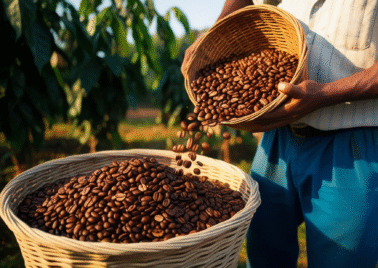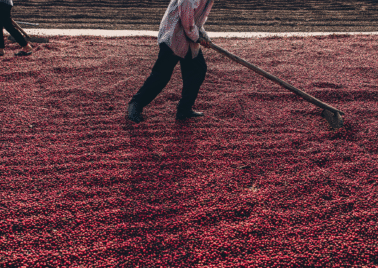
Behind every bag of Sipirok coffee is a smallholder farming family in the Tapanuli highlands. Here’s what coffee farming actually looks like in this part of North Sumatra.
A bag of specialty coffee usually tells you the altitude, the processing method, the tasting notes. It rarely tells you much about the people who grew it. In Sipirok, South Tapanuli, that gap matters — because this coffee isn’t grown on a single large estate with hired labor. It’s grown by a patchwork of smallholder families, each working plots of land measured in fractions of a hectare, on hillsides their families have often farmed for generations.
A Landscape of Small Plots, Not Big Plantations
Drive through the highlands around Sipirok and you won’t find sprawling monoculture coffee estates. Instead, coffee trees grow in small plots — often one or two hectares — tucked between rice paddies, vegetable gardens, and fruit trees. Many farming households don’t rely on coffee alone; it sits alongside other crops as one part of a mixed livelihood that spreads out risk across the seasons.
This matters for how the coffee is grown. Without the scale or capital of an estate, most Sipirok farmers rely on traditional, hands-on methods: manual weeding, family labor during harvest, and generational knowledge about which parts of the hillside ripen earliest or hold moisture best. It’s slower and less standardized than industrial farming, but it also means the coffee tree canopy tends to stay closer to its natural, semi-shaded state — a growing condition that specialty buyers increasingly associate with more complex cup quality.
Harvest Season: All Hands In
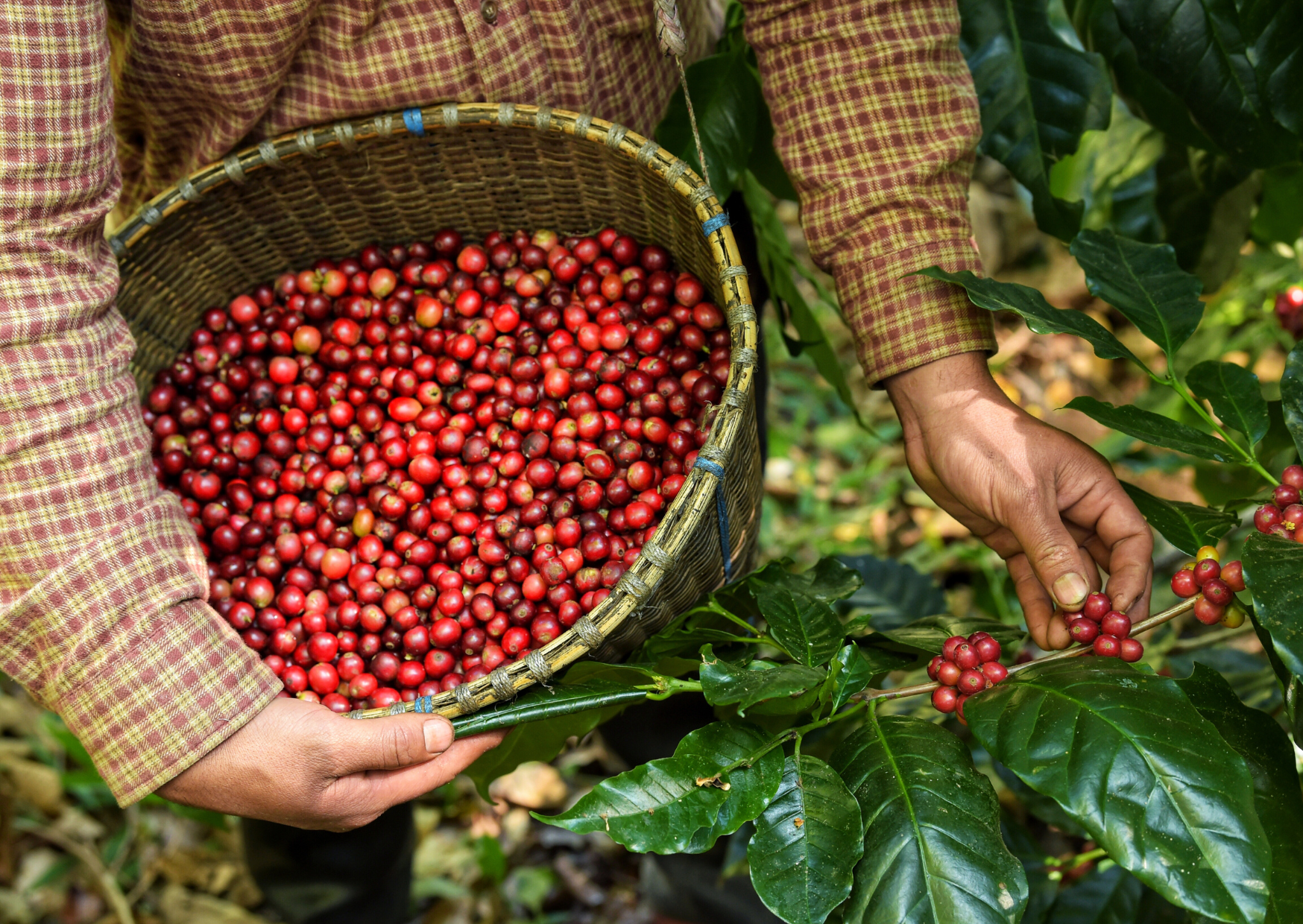
Coffee cherries in this region don’t ripen all at once, and they don’t wait patiently either. During peak harvest, farming families — often including extended relatives who come back specifically for the season — hand-pick ripe red cherries from the trees, usually making several passes through the same plot over a period of weeks rather than one single strip-picking.
This selective, hand-picked harvest is labor-intensive, but it’s also one of the quiet reasons Sumatran smallholder coffee can compete on quality with far larger operations: picking only ripe cherry, rather than stripping branches of everything at once, is one of the single biggest factors separating a clean specialty-grade lot from a defect-heavy commercial one.
From Cherry to Green Bean: A Community Process
After picking, cherries typically move through the wet-hulling process traditional to North Sumatra — pulped and partially fermented at a household or small collection-point level, then hulled while the parchment is still relatively moist, before finishing the drying process as green bean. This is often a shared or cooperative step: farming households don’t necessarily each own full processing equipment, so cherry is frequently pooled at a village or cooperative collection point before moving further down the supply chain toward an exporter.
That collection point is a critical link. It’s where individual family harvests, each slightly different in quality, get sorted, graded, and consolidated into lots large enough to sell — and where fair pricing based on quality, rather than flat per-kilo rates regardless of grade, makes the biggest difference to farmer income.
Why the Relationship Behind the Bean Matters
For an importer or roaster, “smallholder-grown” can sound like a marketing phrase. On the ground in Sipirok, it’s a description of how the entire supply chain actually works: quality depends on relationships — between farming families and the people who buy their cherry, between village collection points and exporters, between exporters and the international buyers who ultimately decide whether that quality gets rewarded with a fair, sustained price.
When those relationships are direct and transparent, farmers have more reason to invest extra effort into selective picking and careful processing, because they can see the payoff. When they’re mediated by several layers of anonymous middlemen, that incentive tends to erode — and so, eventually, does cup quality.
The People Behind the Story You’re Not Usually Told
Sipirok coffee doesn’t yet come with the built-in name recognition of Mandailing or Gayo. What it does come with is a still-visible, still-traceable connection to the families who grow it — small farms on volcanic hillsides, harvested by hand, one household and one cooperative at a time. That’s not a footnote to the coffee’s quality. In a lot of ways, it’s the actual source of it.